
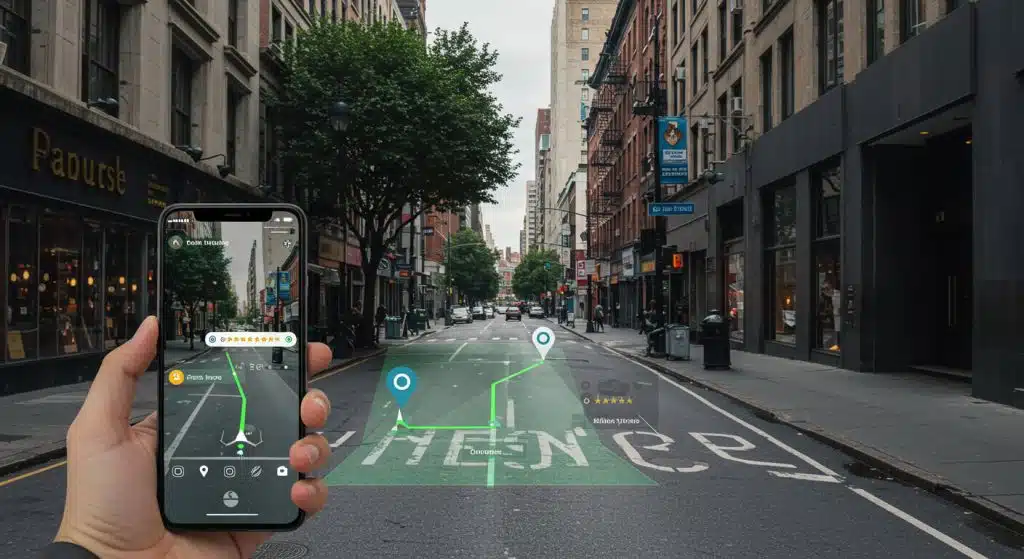
Walking through a huge airport, trying to find the right gate while announcements echo overhead, can feel oddly stressful. Hospitals, shopping centers, stadiums, and train stations create the same problem. Traditional signs help, but they still force people to stop, scan walls, and mentally piece together directions. That process becomes frustrating in crowded or unfamiliar places.
Augmented reality could change that experience completely. Instead of looking away from your surroundings to study a map, AR overlays directions directly onto the real world through a smartphone or smart glasses. Arrows appear on the floor. Digital labels hover above entrances. Real time prompts guide people naturally through a building. Navigation starts feeling less like decoding information and more like simply following a path.
Why Traditional Public Navigation Still Feels Clunky
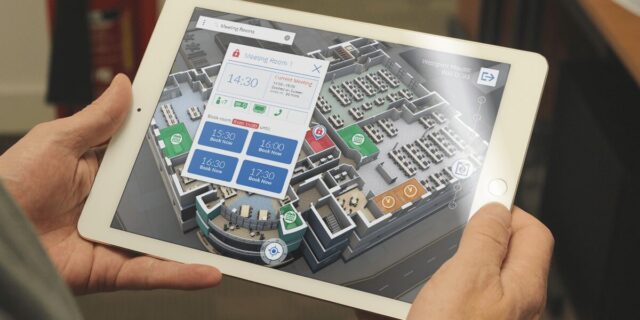
Public spaces have become larger and more complex over the last decade. Airports now resemble mini cities. Hospitals continue expanding into multi building campuses. Universities often spread across dozens of structures with confusing layouts.
Many people already rely on mobile maps outdoors, but indoor environments remain difficult because GPS signals struggle inside buildings. That gap is pushing organizations toward smarter solutions built specifically for indoor navigation.
In recent years, developers working with indoor mapping technology have focused on creating systems that understand building layouts with much greater precision. Instead of static directories, users receive interactive positioning and real time visual guidance inside public venues.
A few ongoing limitations still affect traditional systems:
- Static signs cannot adapt to crowds or temporary closures
- Paper maps create unnecessary cognitive overload
- Visitors with disabilities often need more accessible guidance
- First time visitors lose time trying to orient themselves
According to a 2023 systematic review on AR wayfinding published on arXiv, researchers found that augmented reality can reduce cognitive load while improving situational awareness during navigation tasks.
How AR Navigation Actually Works In Real Spaces
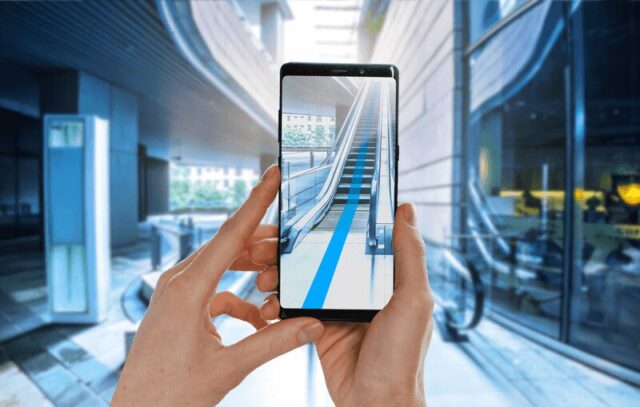
Most people imagine augmented reality as futuristic gaming graphics floating in the air. Navigation focused AR is much more practical than that. The goal is clarity, not spectacle.
Modern systems combine smartphone cameras, spatial mapping, sensors, and positioning tools to understand where a person is standing inside a building. Once the system recognizes the environment, it overlays directional information directly onto the live camera view.
Imagine entering a convention center. You hold up your phone and instantly see glowing arrows guiding you toward Hall B. Elevators are highlighted. Restrooms appear with floating labels. A warning pops up about congestion near one corridor and reroutes you automatically.
Some systems already combine several technologies together:
| Technology | What It Helps With |
| Computer vision | Recognizing surroundings |
| Bluetooth beacons | Estimating indoor location |
| SLAM tracking | Understanding movement in space |
| QR positioning | Establishing exact user starting points |
Research published in the Journal of Systems Engineering and Electronics in 2025 explained how smartphone based AR systems using SLAM and QR positioning improved navigation inside hospitals and educational buildings without requiring expensive infrastructure.
That matters because scalability will determine whether AR navigation becomes mainstream.
Airports And Hospitals Could Benefit The Most
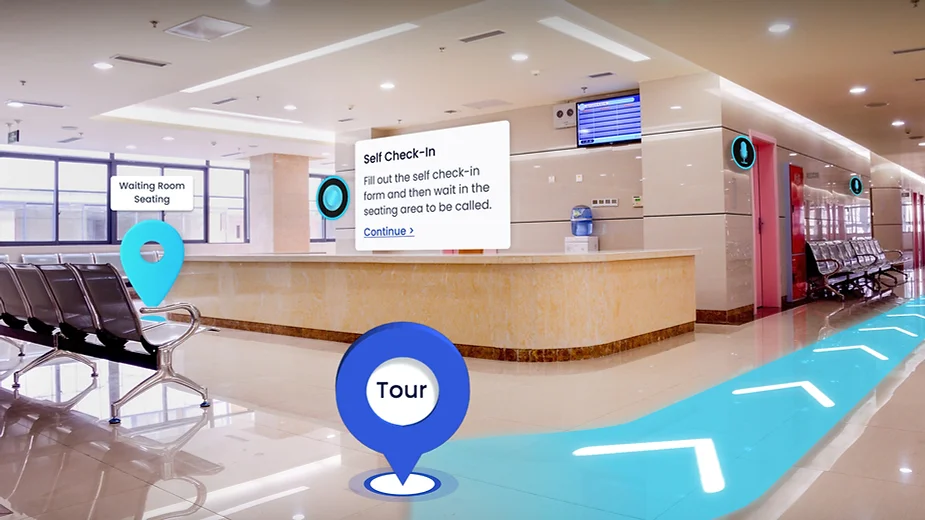
Some public environments create much higher stress levels than others. Airports and hospitals sit near the top of that list because people are often rushed, distracted, anxious, or emotionally overwhelmed.
AR navigation could reduce a surprising amount of mental fatigue in those settings. Instead of searching for tiny overhead signs, travelers could simply follow visual guidance through terminals. Patients visiting hospitals would spend less time wandering hallways while trying to find departments or clinics.
A 2025 University of Michigan hospital study found that participants using AR navigation completed indoor wayfinding tasks faster and with fewer mistakes compared to people using traditional paper maps. The AR group also reported lower anxiety and cognitive workload.
Important finding: Researchers also noted that paper map users retained stronger long term spatial memory, suggesting AR systems should balance convenience with human orientation skills.
That balance will become an important design question in the future.
Accessibility Could Improve In A Major Way
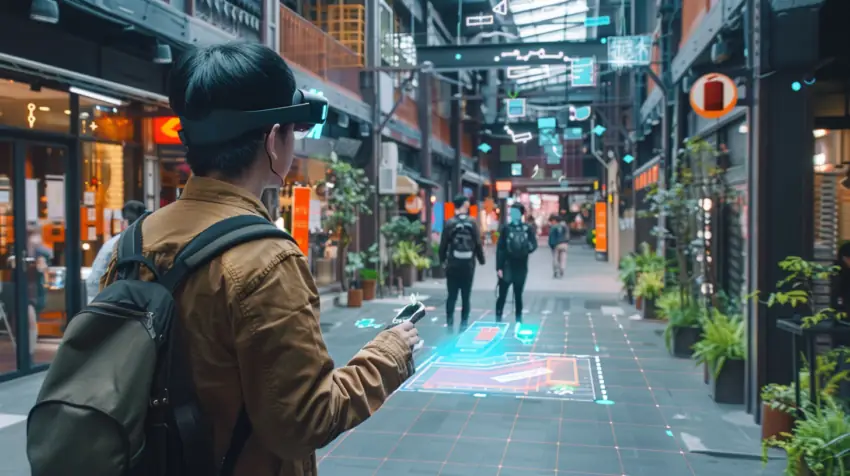
One of the strongest arguments for AR navigation has less to do with convenience and more to do with accessibility. Public navigation systems often fail people with visual impairments, mobility challenges, cognitive conditions, or language barriers.
AR systems could personalize guidance instead of forcing everyone into one standard format.
A few examples already being tested include:
- Audio turn by turn guidance for visually impaired users
- High contrast overlays for low vision navigation
- Multi language visual instructions in international hubs
- Wheelchair friendly route suggestions that avoid stairs
Research focused on accessible wayfinding for visually impaired users has highlighted how digital indoor navigation systems can improve mobility and independence inside airports, transit stations, and large facilities.
That shift matters because accessibility often gets treated as an add on instead of a central design priority. AR navigation has the potential to make inclusion part of the core system itself.
Retail Stores And Museums Could Become More Interactive
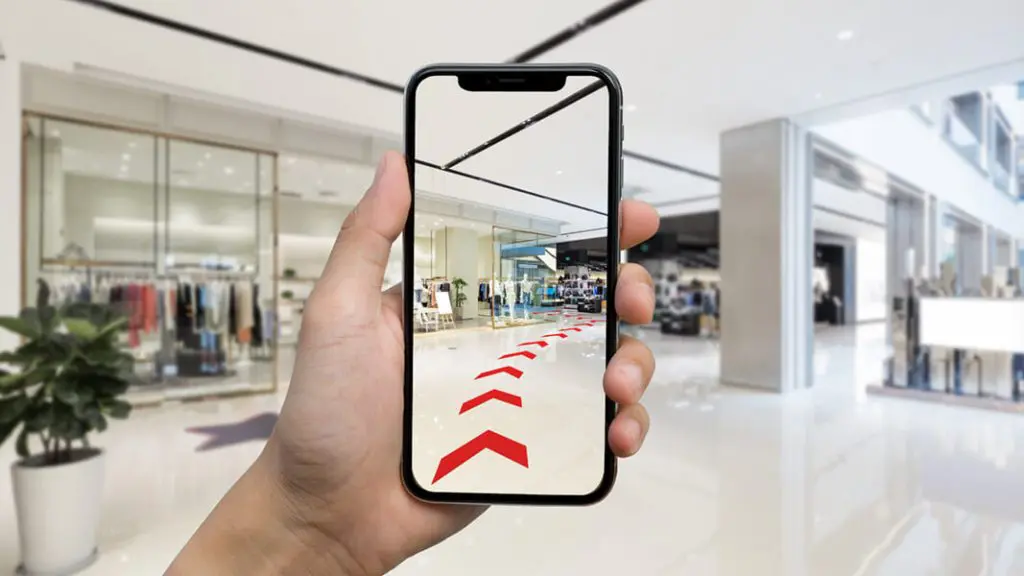
Navigation does not always need to feel purely functional. In some public spaces, AR could turn wayfinding into part of the experience.
Museums already experiment with interactive overlays that guide visitors between exhibits while displaying additional historical information. Shopping centers could eventually offer personalized navigation that adapts to customer interests or shopping lists.
Did you know?
Some indoor navigation platforms now analyze anonymous visitor movement patterns to help museums improve crowd flow and exhibition layouts.
Retail applications could also become surprisingly practical. Instead of wandering store aisles searching for a product, shoppers might receive an exact route to the correct shelf. Stadium visitors could find entrances, food vendors, or restrooms without stopping to study giant maps.
Still, there is a fine line between helpful guidance and overwhelming digital clutter. Good AR navigation will depend heavily on restraint and thoughtful design.
Smart Glasses Could Push AR Navigation Further
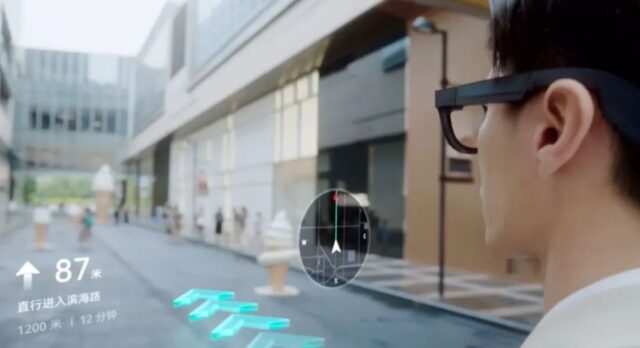
Right now, most AR navigation relies on smartphones because people already carry them everywhere. The long term vision, though, probably involves wearable devices.
Smart glasses would allow navigation instructions to appear naturally within someone’s field of vision without requiring them to constantly hold a phone. That creates a smoother and safer experience, especially in crowded environments.
Researchers working on systems like NavMarkAR have already explored smart glasses designed to improve navigation for older adults. Early studies showed gains in navigation efficiency and spatial understanding.
Several challenges still need solving before widespread adoption happens:
- Battery life remains limited
- Wearable hardware is still expensive
- Privacy concerns continue growing
- Visual distractions could create safety risks
- Positioning accuracy indoors still varies
Even with those obstacles, the direction feels clear. Public navigation is gradually shifting away from static signs toward adaptive digital guidance.
The Biggest Challenge Might Be Human Trust
Technology only succeeds when people actually feel comfortable using it. That could become one of the largest hurdles for AR navigation systems.
Many people still hesitate to trust digital directions completely, especially indoors where accuracy matters more. If an AR system sends someone the wrong way inside an airport or hospital, frustration builds fast.
Privacy concerns also deserve serious attention. Indoor navigation platforms often collect positioning and movement data to function effectively. Public institutions will need clear rules around how that data gets stored, analyzed, and protected.
At the same time, overreliance on digital guidance could weaken natural orientation skills. Researchers have already started debating whether constant AR assistance may reduce long term spatial memory in some situations.
Public acceptance will likely depend on systems that feel reliable, transparent, and genuinely useful instead of flashy.
Frequently Asked Questions
1. How expensive would AR navigation systems be for public buildings?
Costs depend on the size and complexity of the facility. Smaller venues may only need smartphone based software and indoor positioning tools, while airports or hospitals often require larger infrastructure investments. According to recent industry reports, many organizations are moving toward scalable systems that can work with existing smartphones instead of expensive custom hardware.
2. Could AR navigation drain smartphone batteries quickly?
Yes, continuous camera usage, real time positioning, and AR rendering consume more battery power than normal map applications. Developers are currently focusing on lighter processing methods and better sensor efficiency because battery life remains one of the most common complaints in AR usability research.
3. Would AR navigation help international tourists who do not speak the local language?
Potentially very well. Visual guidance reduces reliance on written instructions, which makes navigation easier for visitors who may struggle with local signage. Some modern systems already support multilingual overlays and universal directional icons that reduce confusion in airports, museums, and transportation hubs.
Final Thoughts
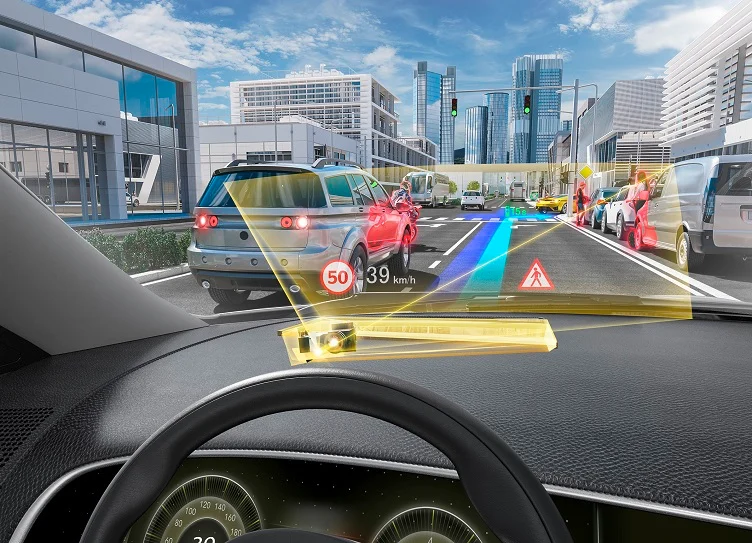
Augmented reality navigation feels much closer to everyday reality than many people realize. Pieces of the technology already exist in airports, museums, shopping centers, and hospitals. The next few years will probably focus less on inventing AR navigation and more on refining it into something seamless enough that people barely notice the technology underneath.
Public spaces continue growing larger and more complicated. Traditional signs alone cannot keep pace forever. AR offers a way to make navigation feel more intuitive, adaptive, and human centered.
The most successful systems will probably be the ones people stop thinking about entirely. Instead of fighting with maps and directories, visitors simply move through spaces naturally, with guidance appearing exactly when needed and disappearing when it is not.